How Peverholl Organises and Presents Information
An explanation of the system's structure, its intended purpose, and how users can get the most from the information it makes available.
What Peverholl Is Designed to Do
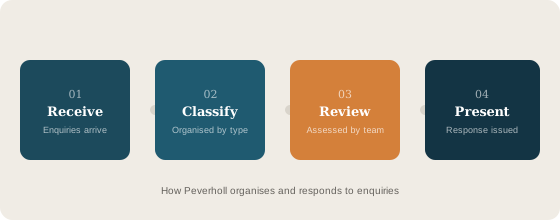
Peverholl is an information-organisation system. Its role is to receive, arrange, and present information in a structured format that is easier to work with than an unmanaged collection of data. The system does not generate conclusions on your behalf, nor does it take action without your involvement. Instead, it organises what is available so that review becomes more straightforward.
The system is designed for users who interact with a variety of information types — enquiries, reference data, structured records — and who benefit from seeing that information arranged consistently rather than in an ad hoc manner.
Classification
When information enters the system, it is assigned to a category based on its type and content. This classification step is what allows subsequent review to be relevant and efficient. Rather than presenting all available information at once, Peverholl separates it by category so that users can focus on what is most pertinent to their enquiry.
Arrangement
Classified information is arranged within each category according to relevance and recency. The system applies a consistent ordering logic that is intended to surface the most useful information without requiring the user to search manually or apply their own sort criteria.
Presentation
The arranged information is presented through the Peverholl interface in a format designed for clarity. Field labels, structured layouts, and navigable sections make it possible to move through large sets of information methodically.
Review and Response
Where a user submits an enquiry, the response is prepared by the Peverholl support team and returned through the same structured format. This ensures that the reply is as easy to interpret as the original information.
What You Can Learn From the Available Information
Peverholl makes a range of information available to users who interact with the system. The scope of that information depends on the type of enquiry submitted and the access level associated with the user's account.
In general terms, the system can present:
- The current classification and status of submitted enquiries.
- Reference information relevant to the user's area of interest.
- Structured summaries that replace manual collation of separate sources.
- Historical records of previous interactions with the support team.
- Guidance documents explaining how particular processes work.
What Peverholl does not present is information it does not hold, predictions about future states of affairs, or assessments that have not been formally prepared. The system presents what is available; it does not invent or estimate.
A note on the scope of claims: The information presented through Peverholl reflects what has been submitted to and recorded within the system. It is not independently verified unless stated otherwise. Users are encouraged to treat system-presented information as a useful reference rather than a definitive or independently audited record.
Peverholl does not claim that its classifications are infallible or that its structured summaries are free of omission. If a discrepancy is identified, users are encouraged to raise it through the enquiry channel.
Frequently Asked Questions About the Platform
What kinds of information does Peverholl organise?
Peverholl is designed to work with text-based enquiries, structured records, and reference information submitted by or relevant to the user. The system arranges this information by category and presents it in a consistent format. It is not designed for multimedia files or real-time data streams.
Does the system require a login to access information?
Access to the Peverholl interface requires an account associated with an active enquiry or an approved access request. This informational website is publicly available, but the system itself operates on an access-controlled basis. The enquiry page on this site explains how to request access.
How long does it take to receive a response to an enquiry?
The Peverholl team reviews enquiries in the order they are received. No specific response time is guaranteed, as the time required depends on the nature and complexity of the enquiry. Users will be informed if their submission has been received and if clarification is needed before a response can be prepared.
Can I request a correction to information held in the system?
Yes. If you believe that information recorded in connection with your enquiry is inaccurate or incomplete, you may raise this through the contact form. The team will review the matter and respond accordingly. Any correction would be applied to the system's records following that review.
Is Peverholl connected to external data sources?
Peverholl draws on information submitted directly to and stored within its own system. It does not claim to aggregate or retrieve information from external databases in real time. If a specific data integration is relevant to your situation, the support team can clarify what is currently available.
What should I do if I cannot find the information I expected?
If the information you expected is not visible within the system, the most effective step is to submit a specific enquiry describing what you are looking for. The team will confirm whether the information is held, whether it falls within the scope of what is currently available to your account, and whether any alternative route exists.
Also on this site
Continue Exploring Peverholl
Find out more about what the system can do, or contact the team directly.